“A basic technical knowledge sharing“
What is the perfume?
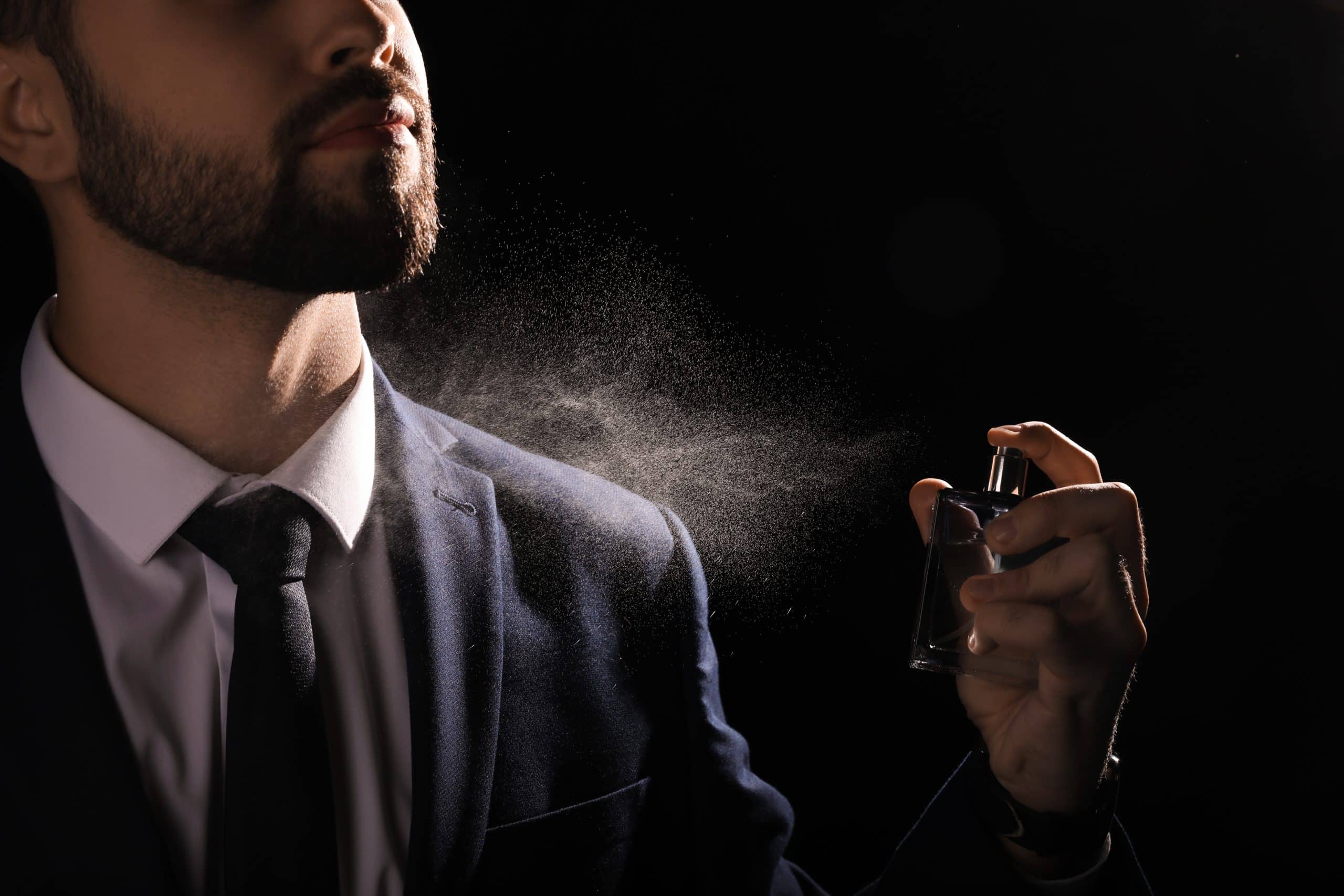
Perfume is a mixture of essential oils, fixatives and solvents, designed to impart a pleasing scent aimed at:
- Create a personal mark and hide body odor
- Stimulate emotions and memories
- Used in beauty, enhancing style
- Other applications such as personal care & therapy, consumer goods, space.
Essentially, perfume is a type of aromatic preparation containing a certain proportion of aromatic essential oils dissolved in a solvent:
- Fragrances or essential oils (natural or synthetic) help to give the main direction to the perfume.
- Solvent used to dissolve essential oils, helps diffuse fragrance, ethanol of perfumery grade is the pure ethanol 95-96% v/v.
- Fixative helps long lasting and stability for the scent. For example, It can be ambergris, musk, myrrh, coumarin compound, etc.
- Other substances such as BHT, tocopherol used as preservatives, colorants, pH adjusters.
1. Which ways to classify perfume?
Perfumers and manufacturers often have many classification systems, depending on the essential oil percentage, scent family, or intended use.
1.1 – Classification based on the essential oil percentage
| Type | Oil percentage | Characteristic |
| Perfume / Parfum | 20–40% | Long-lasts 8-12 hrs or evenlonger, high price |
| Eau de Parfum (EDP) | 15–20% | Long lasts 6-8 hrs |
| Eau de Toilette (EDT) | 5–15% | Long lasts 4–6 hrs |
| Eau de Cologne (EDC) | 2–4% | Long lasts 2–3 hrs |
| Eau Fraîche / Splash | <3% | Long lasts 1–2 hrs, light scent |
1.2 – Fragrance families and the structure of the scent layer:
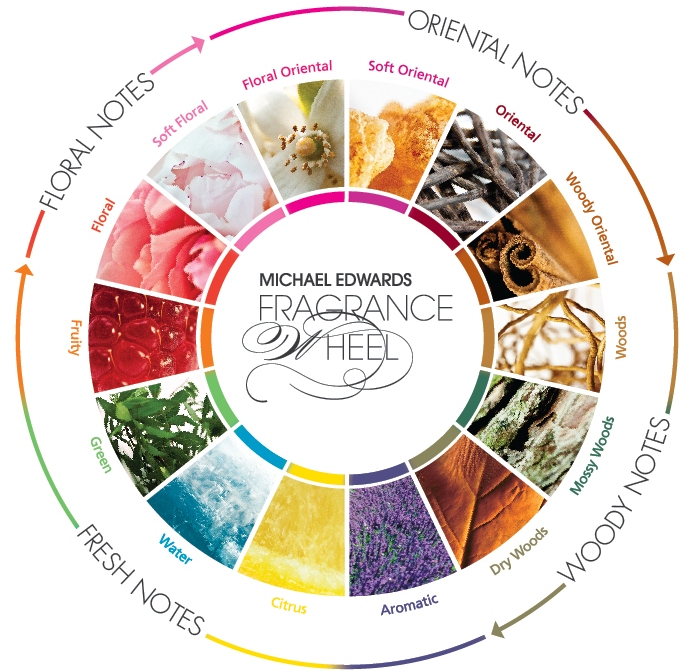
Fragrance Wheel system of Michael Edwards divided scent into four main classes, each class is divided into small groups.
- Floral: rose, jasmine, lily of the valley, orchid, etc.
- Oriental: sweet and warm scents such as vanilla, balm, spices, etc.
- Woody: Sandalwood, cedarwood, patchouli, etc
- Fresh: Citrus, herbal, green, aquatic, etc.
Besides, In order to be balanced and carry a long-lasting and desirable smell, essential oils blends should contain approximately:
- 20 – 30% of top notes: first impression, fast evaporation within first 30 minutes
- 40 – 60% of middle notes (heart): Dominant scent, longer lasting.
- 10 – 25% of base notes: base scent, longest lasting.
Combining these two factors, people create a detail table to easily choose the desired perfume scent.
| Class | Middle Notes | Base Notes | Top Notes |
|---|---|---|---|
| Citrus | Grapefruit; Lemon; Lemongrass; Lime; Mandarin; Sweet Orange | ||
| Floral | Bergamot; Neroli; Petitgrain | Geranium; Palmarosa; Ylang Ylang | |
| Fruity | Ramon | ||
| Herbal | Peppermint; Thyme | Chamomile, German ; Lavender; Rosemary | Clary sage |
| Camphor | Marjoram, sweet; Pine | ||
| Spicy | Clove; Cinnamon | Cardamom; Ginger | Frankincense ; Myrrh |
| Woody | Rosewood | Cedarwood ; Patchouli; Sandalwood, East Indian ; Vetiver |
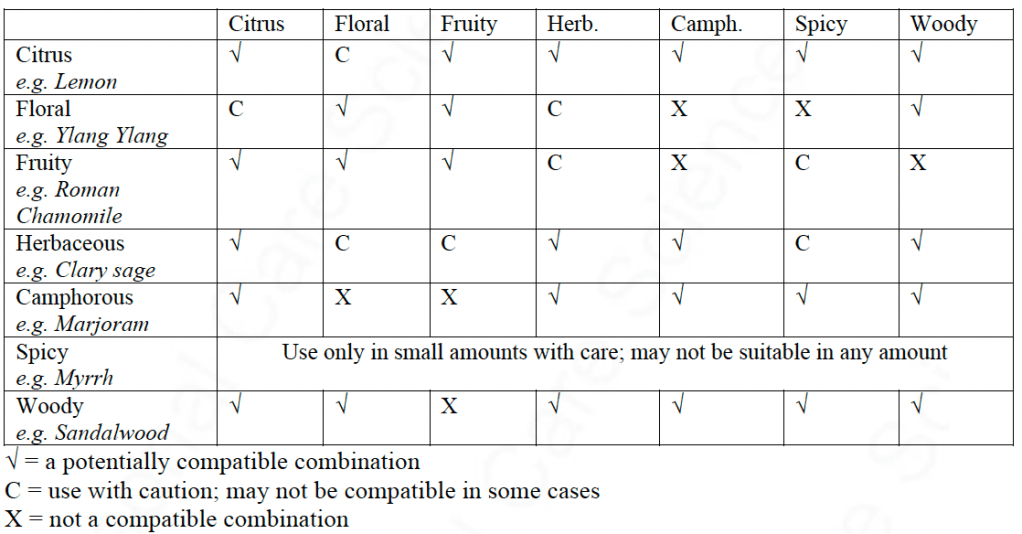
To ensure that the fragrance families are harmoniously blended together and do not cause discomfort to the user. The compatibility when blending these aroma type is refer to below table:
1.3 – Based on intended use
- Personal perfume (perfume spray, rollerball)
- Room/space perfume (room spray, reed diffuser)
- Perfume for consumer goods (soap, shampoo, cosmetic)
- Industrial perfumes (scented candles, cleaning products)
1.4 – Perfume application on body.
The temperature emitted from our body will be different in different locations at pulse points, and depends on gender. Typically as shown in the picture.
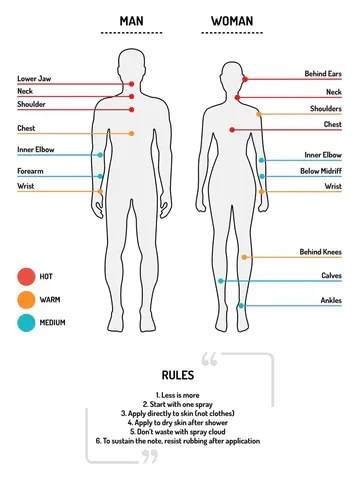
The application of perfume in each location depends entirely on the purpose of our use, for example:
* If we want to create a personal highlight, or to spread the scent strongly around or the person behind us: the neck, back and elbows are often prioritized. The number of sprays is 2-4 times on 1 location.
* If you only require a light scent and close to the person opposite: 1-2 sprays on the arms, neck and chest are often prioritized.
“Perfume can create a unique scent for the body, however, the essential oils in perfume can also cause allergies and potential contraindicated for use by pregnant women:“
| Oestrogenic agents | Aniseed; fennel |
| Emmenagogue agent | Cedarwood, clary sage; cypress; peppermint; rosemary; rose; sweet marjoram. |
| Teratogenic agents | Wormwood; sage |
| Abortifacient agents | Mugwort; parsley seed; pennyroyal; rue; thuja; tansy; wormwood |
2. How are essential oils produced?
Essential oils are obtained by extracting leaves, flowers, branches, bark of trees, etc. Based on the boiling point, evaporation temperature and material properties, people have the following common methods:
2.1 – Hydrodistillation: Steam is generated in the same vessel as the plant material, releasing essential oils which are then condensed and separated.
Advantages: Simple process, low cost.
Disadvantages: Requires large amounts of water; unsuitable for low-oil plants.
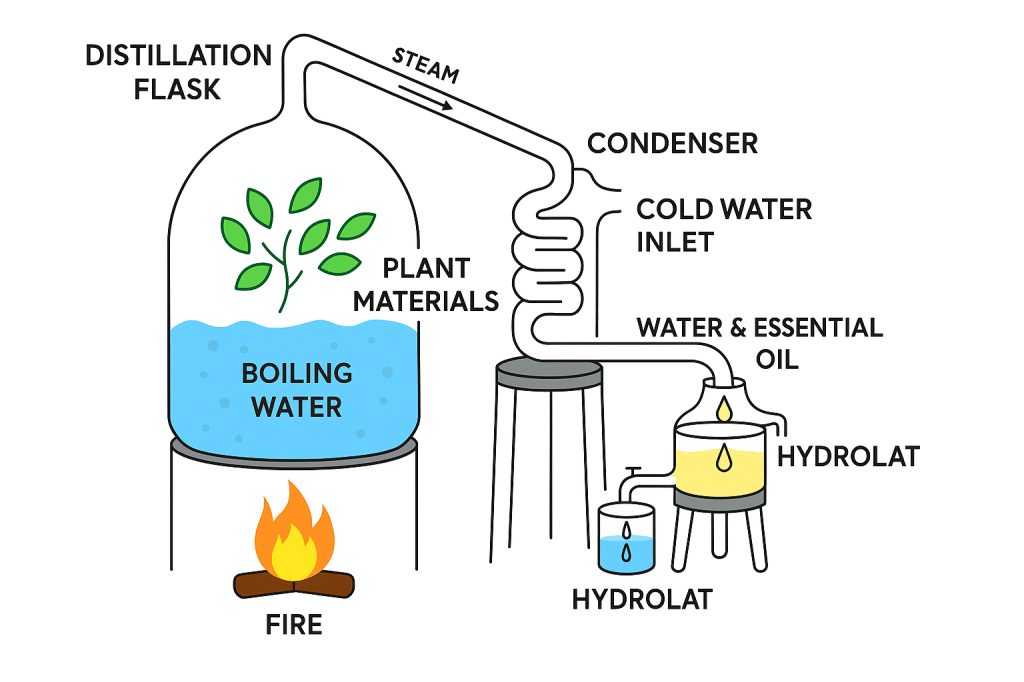
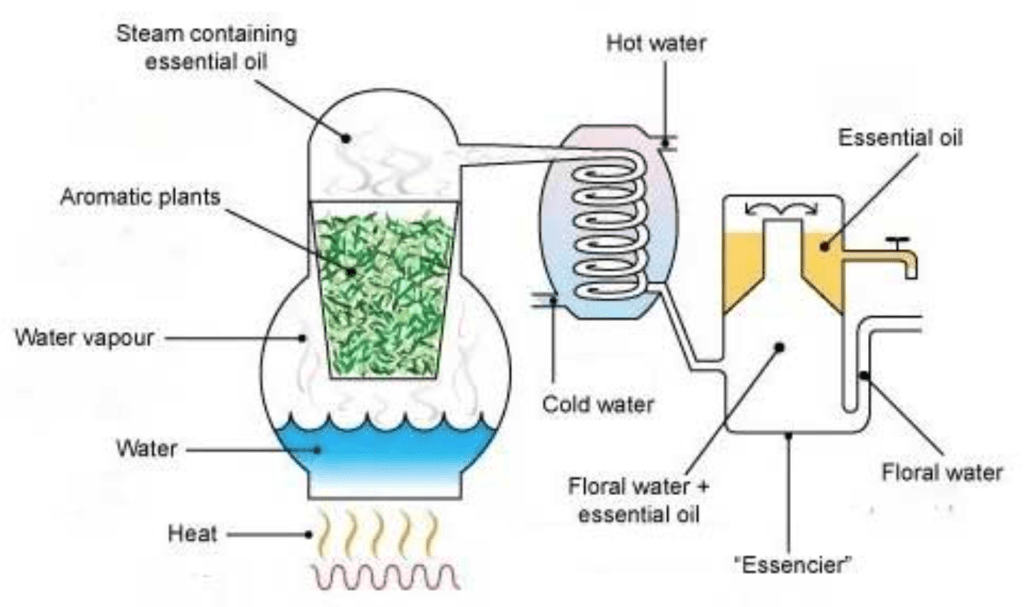
2.2 – Steam Distillation: Steam passes through plant material in a separate chamber, then is condensed and separated.
Advantages: Preserves color, aroma, and composition; chemical-free.
Disadvantages: Time- and water-intensive; low yield for plants with low oil content.
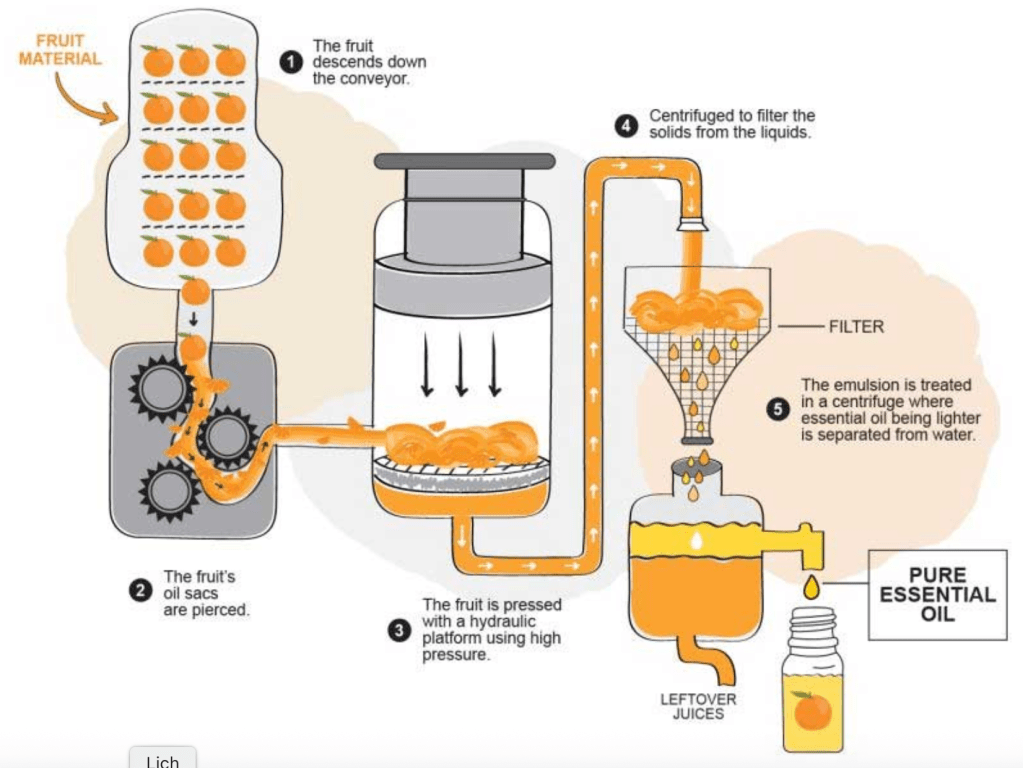
2.3 – Cold Press Extraction: Mechanical pressing breaks oil sacs in citrus peels (orange, lemon, grapefruit), then is condensed and separated.
Advantages: Maintains natural aroma quality.
Disadvantages: Only suitable for citrus or oil-rich peels.
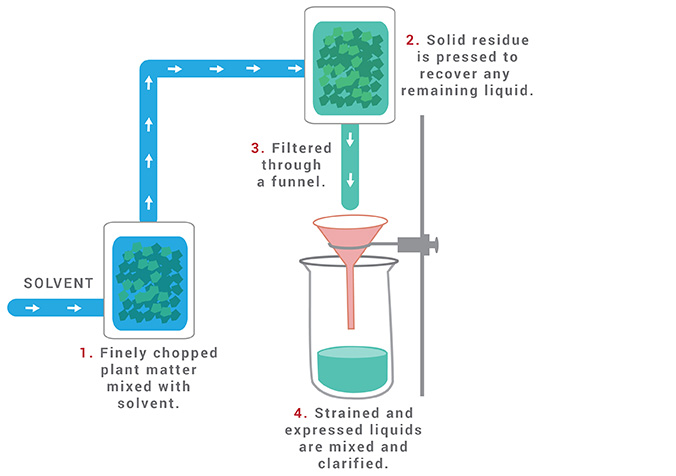
2.4 – Solvent Extraction: Organic solvents (hexane, ethanol) dissolve essential oils, which are later separated from the solvent.
Advantages: Retains natural fragrance; high efficiency; suitable for large-scale production.
Disadvantages: Possible solvent residues; may contain impurities.

2.5 – Enfleurage (Floral Extraction): Odorless animal fat absorbs fragrance from delicate flowers; oils are later separated with alcohol.
Advantages: Pure, unaltered floral scent; no heat degradation.
Disadvantages: Labor-intensive, time-consuming, expensive.
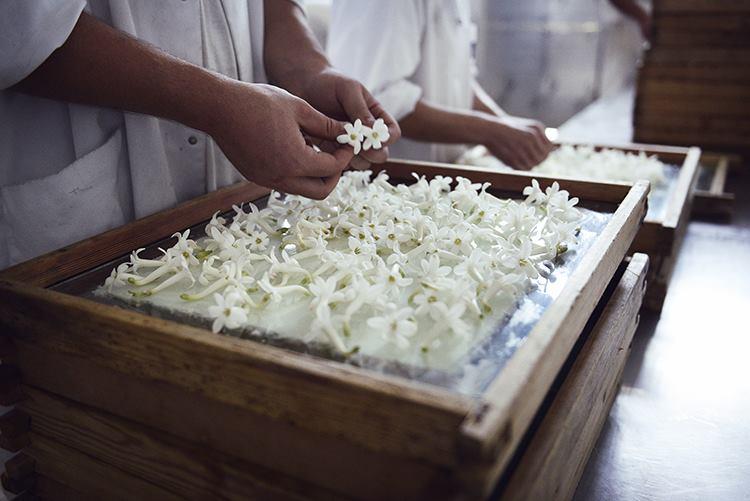
2.6 – Maceration: Plant material is soaked in carrier oil or solvent for a long period, and then essential oil is separated by filter and separation
Advantages: Simple, low equipment requirements.
Disadvantages: Slow process; limited to certain plant types.
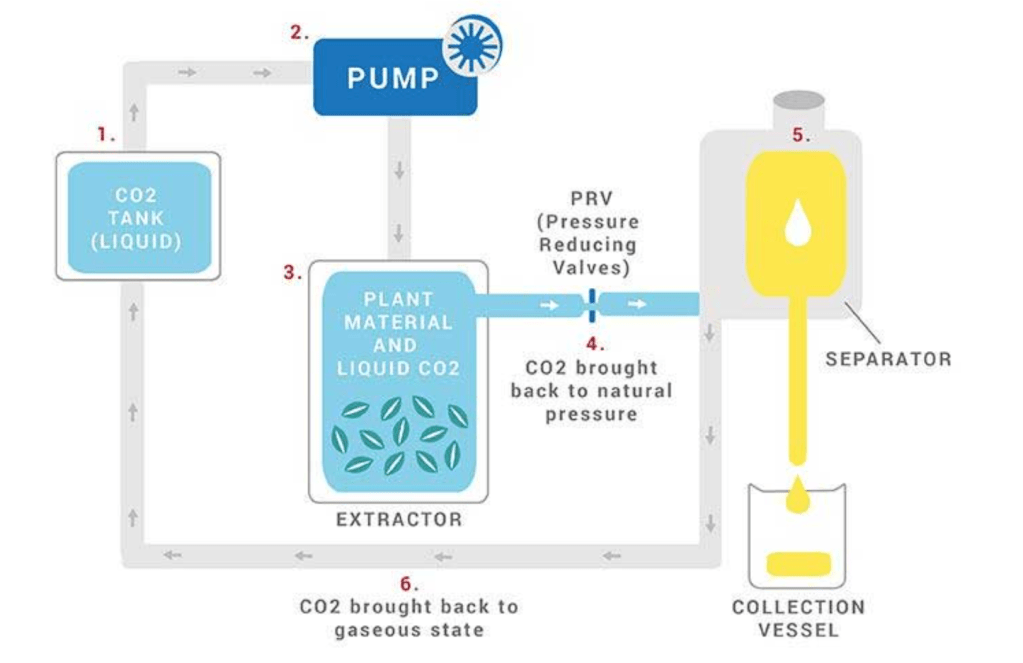
2.7 – Supercritical CO₂: Uses CO₂ in a supercritical state (high pressure & temperature) to dissolve essential oils, then reduces pressure to let CO₂ evaporate and obtain essential oil by separator.
Advantages: Low temperature, preserves natural aroma, pure oil, high efficiency.
Disadvantages: Expensive equipment, requires high technical skill.
 Lan Pham _ ENG
Leave a comment