
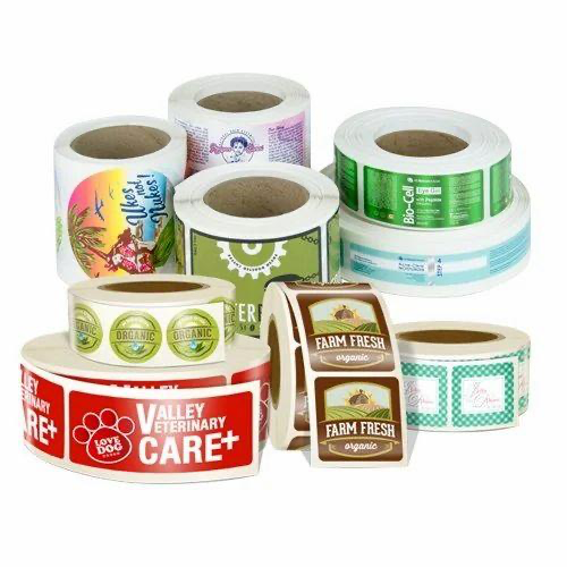
1. Factors in Label Selection
- Labels serve as a key communication tool with customers: promoting brand image, giving product/usage details, or even health/beauty claims.
- Selection depends on:
- Cost (materials, printing, conversion, logistics).
- Durability & sustainability (scratch resistance, recyclability, removability).
- Production flexibility (line changeover speed, run length).
- Application needs (adhesion, temperature, chemical resistance).
- Format & security (booklets, tamper-evident, holograms, RFID, QR codes).
2. Nature & Function of Labels
- Primary labels: carry brand identity, logo, and design appeal.
- Secondary labels: carry mandatory information (ingredients, nutrition, warnings, barcodes, etc.).
- Logistics labels: used for cartons, trays, pallets for tracking goods in supply chains.
- Smart labels: integrate technology (RFID, QR, Snap Tags) for interactive marketing and product authentication.
3. Types of Labels
- Non-adhesive labels:
- Glue-applied: common for high-speed beverage and canned food packaging.
- In-mould: label fused into plastic container during moulding.
- Sleeving: 360° decoration with PVC, PET, OPP films.
- Self-adhesive labels:
- Most popular today (~50% of market).
- Built as a “sandwich” of face stock, adhesive, and liner.
- Includes innovations like linerless labels (eco-friendly, no liner waste).
4. Label Adhesives
- Four main types:
- Hot-melt (fast-setting, thermoplastic).
- Water-based (natural/synthetic polymers, eco-friendlier).
- Solvent-based (strong, heat-resistant, but declining due to regulations).
- Curable adhesives (UV/e-beam cured, durable).
- Adhesives tailored for glass, plastic, or metal containers with criteria like removability, freezer-grade, wet-strength, or food-contact safety.
5. Label Production & Printing
- Printing processes:
- Letterpress, Flexography, Offset Lithography, Gravure, Screen printing.
- Modern methods: VIP (Variable Information Printing) for barcodes/dates, and Digital printing for short runs and customization.
- Post-print finishing: Lacquering, coating, bronzing, embossing, hot-foil stamping for premium effects.
6. Label Finishing
- Cutting, punching, die-cutting (flat, rotary, digital laser).
- Shapes evolved from simple rectangles to complex custom designs for brand recognition.
- Labels handled/stored carefully to prevent adhesive ageing, curling, or delamination.
7. Specifications & Quality Control
- Self-adhesive labels tested for peel adhesion, shear resistance, quick-stick tack, coat weight, wash-off, tensile strength, release force.
- Wet-glue labels tested for tear strength, water absorption, caustic resistance, stiffness, tensile strength.
8. Sustainability & Legislation
- Growing need for recyclable, biodegradable, or hybrid label materials.
- Environmental impact of adhesives and label waste addressed by developing circular packaging-chain solutions.
- Labels must comply with regulations for safety, traceability, barcoding, and consumer information.
Find detail content via the article below:
 Lan Pham _ ENG
Leave a comment